




09 July 2026
|
8:10:45
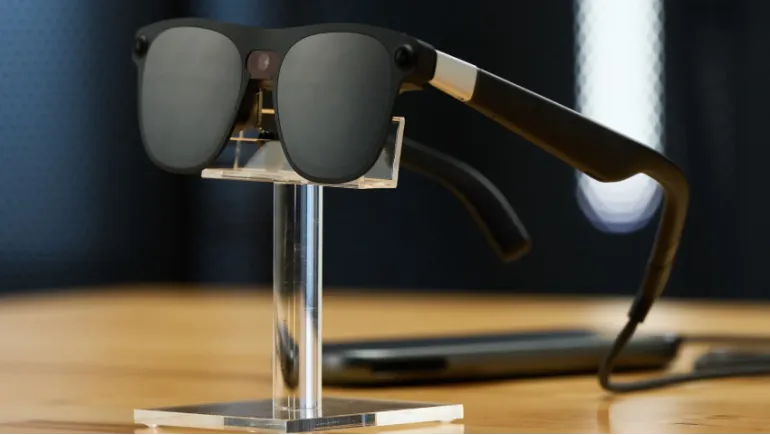
Smart glasses have been a technology promise since Google Glass arrived and spectacularly stumbled over a decade ago. In 2026, Google is making a far more strategically grounded return to the wearable computing space, and this time the product, the partnerships, and the underlying AI infrastructure suggest a very different outcome is possible.
At its annual Google I/O 2026 developer conference on May 19, Google pulled back the curtain on its first consumer "intelligent eyewear" a new category of AI-powered audio glasses built in partnership with Samsung, Warby Parker, and Gentle Monster. The glasses run on Android XR, Google's operating system for extended reality devices, and are deeply integrated with Gemini AI.
They feature built-in cameras, speakers, and microphones, but notably skip an in-lens display for now. Google says the audio-first design is intentional, delivering information through audio rather than visual overlays.
Google is launching two distinct versions to address different user needs and comfort levels.
The AI glasses designed for screen-free assistance will use built-in speakers, microphones, and cameras to let users chat naturally with Gemini, take photos, and get help. These are designed to look and function like a standard pair of glasses wearable all day without social friction or battery anxiety about a power-hungry display.
The second model display AI glasses adds an in-lens display that privately shows users contextual information: turn-by-turn navigation, translation captions, calendar reminders, and real-time answers to voice queries, visible only to the wearer.
The AI glasses designed for screen-free assistance will be released first.
Google's hardware partner strategy directly addresses the original Google Glass failure the product was technologically interesting but socially unwearable. This time, the company has partnered with brands that people already trust for eyewear design.
Hardware partners include Samsung, Warby Parker, and Gentle Monster, with Gucci and Kering Eyewear joining later. Warby Parker brings accessible, stylish everyday frames at moderate price points. Gentle Monster brings fashion-forward premium design credibility. The involvement of Gucci signals that Google is seriously pursuing the upmarket fashion audience that technology companies rarely reach successfully.
The glasses are powered by Gemini AI delivering real-time language translation, contextual information retrieval, navigation assistance, photo capture and analysis, and hands-free messaging. iPhone support is confirmed, making these the first Android XR glasses to work cross-platform out of the box.
Cross-platform iPhone support is strategically significant it removes the Android-only limitation that has historically restricted Google hardware products to a subset of the potential market.
Google is directly challenging Meta's Ray-Ban smart glasses, which sold over 7 million units in 2025. Meta's glasses have proven that consumers will adopt well-designed AI audio glasses when the social design is right the Ray-Ban partnership gave Meta's technology mainstream acceptability that standalone tech hardware rarely achieves.
Google's partnership strategy mirrors this approach with arguably more premium design credentials, deeper AI capability through Gemini, and broader platform integration through Google's search, maps, calendar, and communication services.
A fall 2026 launch is confirmed, though Google has not yet revealed specific pricing or exact release dates. Given the partnerships involved and the competitive pressure from Meta's established position, a holiday season launch window seems strategically probable.
For consumers in Bangladesh and South Asia, availability timelines through local retail and import channels will depend on Google's regional distribution decisions worth monitoring through official Google channels as the launch approaches.
Google's AI glasses represent more than a product launch they represent a vision of AI that moves beyond the screen entirely. As Gemini becomes more capable and more contextually aware, the ability to access that intelligence through a natural voice interface while seeing the world normally rather than staring at a phone represents a genuinely meaningful evolution in how AI assistance integrates into daily life.












Comments
There are no comments for this Article.