




16 August 2026
|
8:10:45
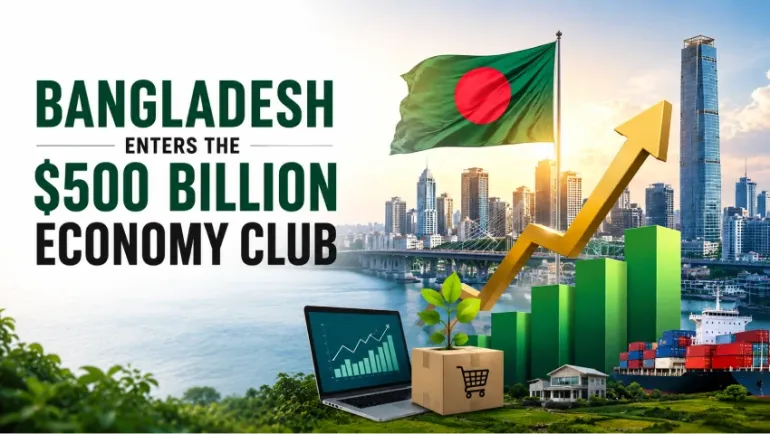
Bangladesh has officially crossed the $500 billion GDP milestone, marking a historic achievement in the country’s economic journey. This rapid growth positions Bangladesh as one of the fastest-growing economies in Asia. For local businesses in Bangladesh, this milestone brings new opportunities, rising competition, and the need for innovation in an evolving market.
The Bangladesh economy 2026 has reached a new level with strong contributions from key sectors like ready-made garments (RMG), agriculture, remittances, and the growing digital economy. Crossing the $500 billion GDP mark improves global recognition and strengthens Bangladesh’s position as an emerging economic powerhouse.
This growth indicates higher productivity, increased exports, and stronger domestic consumption—factors that directly impact business growth in Bangladesh.
With economic expansion, the middle-class population in Bangladesh is growing rapidly. This leads to increased demand for quality products and services across industries such as retail, e-commerce, healthcare, education, and food services.
Small and medium enterprises (SMEs in Bangladesh) can benefit by:
This is a crucial time for entrepreneurs to scale and tap into the growing consumer market.
The foreign direct investment (FDI) in Bangladesh is expected to increase as global investors recognize the country’s economic potential. International companies entering the market bring advanced technology and global standards.
While this creates partnership opportunities, it also increases competition for local companies in Bangladesh. Businesses must focus on:
The rise of the digital economy in Bangladesh is transforming how businesses operate. From mobile banking to e-commerce platforms, technology is driving efficiency and growth.
To stay competitive, businesses should adopt:
Companies investing in digital transformation will lead the next phase of growth.
Major infrastructure projects such as Padma Bridge, metro rail, highways, and port expansions are improving connectivity across the country. This development reduces logistics costs and opens new markets beyond Dhaka.
For businesses, this means:
Despite rapid growth, businesses must navigate challenges such as inflation in Bangladesh, currency fluctuations, and global economic uncertainty.
Key strategies to overcome these challenges include:
SMEs in Bangladesh play a vital role in employment generation and economic stability. As the economy grows, SMEs must embrace innovation and digital tools to remain competitive.
Government support, access to finance, and training programs can further empower small businesses to scale and contribute to economic growth.
Crossing the $500 billion GDP milestone is just the beginning. Bangladesh aims to become an upper-middle-income country in the coming years. Continued growth will depend on policy reforms, technology adoption, and export diversification.
For businesses in Bangladesh, the future is promising. Companies that focus on innovation, quality, and adaptability will thrive in this rapidly evolving economic landscape.
Bangladesh’s economic growth story is a testament to resilience and opportunity—making it an exciting time for entrepreneurs, investors, and local businesses alike.












Comments
There are no comments for this Article.