




31 July 2026
|
8:10:45
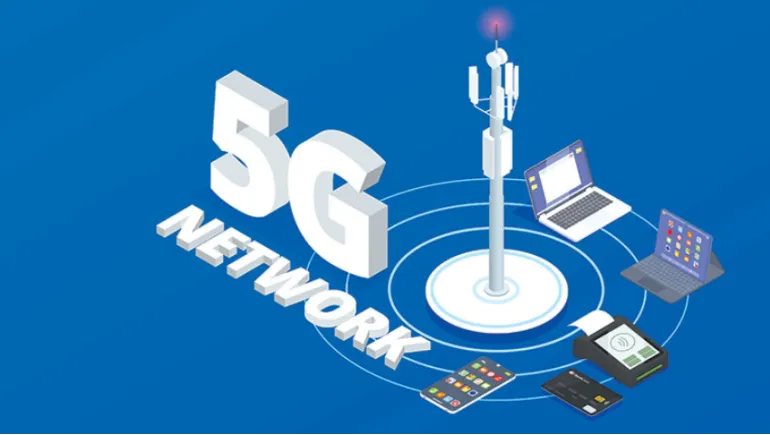
The rollout of 5G across South Asia is one of the most significant technology infrastructure events of this decade. More than a simple speed upgrade, 5G represents a fundamental shift in what is possible with wireless connectivity enabling new categories of applications, transforming industries, and reshaping how hundreds of millions of people work, learn, and communicate. In 2026, the impact is becoming tangible and measurable.
5G delivers three core improvements over 4G LTE: dramatically higher speeds (theoretical peak speeds up to 10 Gbps versus 4G's 100 Mbps), significantly lower latency (the delay between sending and receiving data, reduced from around 50ms on 4G to under 5ms on 5G), and massively greater capacity to support simultaneous device connections.
In practical terms, this means downloading a full HD movie in seconds rather than minutes, seamless video calls even in crowded environments, and the ability to connect thousands of smart devices within a small geographic area without network congestion.
India is furthest along in South Asia's 5G transition, with major telecom operators having deployed 5G in dozens of cities. Urban centers including Mumbai, Delhi, Bengaluru, and Chennai have active 5G coverage, and rural expansion is underway.
Bangladesh launched its official 5G pilot program, with initial deployment focused on Dhaka's major commercial and residential zones. Teletalk completed Bangladesh's first 5G test in select areas, and private operators are advancing network investment plans. Nationwide coverage remains a medium-term target, but urban early adopters are already experiencing 5G connectivity.
Pakistan and Sri Lanka are in active deployment phases, with 5G services operational in major cities and expansion plans progressing.
High-speed, low-latency 5G is eliminating buffering entirely for most users in covered areas. 4K video streaming, cloud gaming, and real-time interactive content that was impractical on 4G is now smooth and reliable. Streaming platforms are responding by offering higher quality tiers specifically optimized for 5G connections.
5G's low latency makes remote work indistinguishable from in-office connectivity for most tasks. Video conferencing is clearer, file transfers are faster, and cloud-based tools respond instantly. For South Asia's large and growing remote workforce, 5G is removing the last significant connectivity barrier to full productivity.
Faster connectivity accelerates transaction processing, reduces checkout friction in mobile commerce, and enables more sophisticated real-time financial services. Mobile banking applications, payment platforms, and digital wallets perform demonstrably better on 5G networks, encouraging higher transaction volumes and user confidence.
5G's capacity to support massive numbers of simultaneously connected devices is enabling smart city applications intelligent traffic management, connected public infrastructure, environmental monitoring, and emergency response systems that are impractical on 4G networks.
In Bangladesh, smart city initiatives in Dhaka are incorporating 5G infrastructure into their planning frameworks, recognizing that reliable high-capacity connectivity is foundational to urban digitization.
Low-latency 5G connectivity enables real-time remote medical consultations with the responsiveness required for clinical-quality interactions. More significantly, it opens the door to remote diagnostics using connected medical devices and, eventually, remotely assisted surgical procedures applications with enormous potential for healthcare access in South Asia's underserved rural areas.
For Bangladeshi businesses, 5G creates both competitive opportunity and urgency. Companies in manufacturing can deploy 5G-connected sensors for real-time production monitoring. Retailers can implement augmented reality shopping experiences. Logistics operators can build more precise real-time tracking systems.
The businesses that invest early in 5G-enabled capabilities before the technology becomes standard will establish operational advantages that competitors will find difficult and expensive to replicate.
5G rollout in South Asia faces real challenges. Infrastructure investment requirements are substantial, and coverage expansion into rural areas is economically challenging for operators. 5G-compatible devices, while increasingly available at mid-range price points, are still not universally accessible for the lowest-income market segments. Spectrum allocation and regulatory frameworks are still being finalized in several South Asian markets.
5G is not simply a faster version of what came before it is an enabling technology that makes possible things that were not previously feasible at scale. As coverage expands across South Asia's cities and eventually into rural areas, the economic and social impact will be profound. For entrepreneurs, businesses, and consumers across Bangladesh and the wider region, understanding and leveraging 5G's capabilities is becoming an increasingly important competitive and personal advantage.












Comments
There are no comments for this Article.