




12 August 2026
|
8:10:45
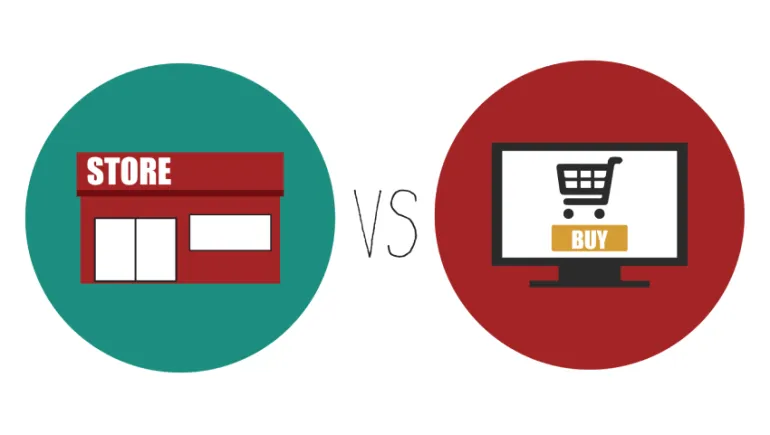
The question of whether to build a retail business online, in a physical location, or through a combination of both is one of the most consequential decisions facing Bangladeshi entrepreneurs and existing retailers in 2026. The answer is more nuanced than the "e-commerce wins everything" narrative suggests and the evidence from Bangladesh's retail landscape points toward a more complex, more interesting reality.
E-commerce in Bangladesh has grown consistently at double-digit rates, driven by smartphone penetration, digital payment infrastructure development, and a consumer base that has developed genuine trust and habit around online purchasing across fashion, electronics, groceries, and consumer goods.
Physical retail, meanwhile, has not collapsed it has adapted. The street-level shops, neighborhood stores, and retail markets that characterize Bangladesh's commercial geography remain central to how most Bangladeshis shop for most things, particularly outside major urban centers and for product categories where tactile evaluation, immediate availability, or trusted personal relationships are primary purchase drivers.
An e-commerce business eliminates the fixed costs that make physical retail capital-intensive shop rental, fitout, utilities, and location-dependent staff. A Dhaka market shop space commanding 80,000 BDT per month in rent represents an ongoing fixed cost that an online seller operating from home does not face.
This cost structure advantage means online sellers can operate profitably at lower revenue levels and have more capital available for inventory, marketing, and product development.
A physical store serves the customers who can reach it. An e-commerce store serves anyone in Bangladesh or internationally who finds it and chooses to buy. This geographic reach multiplication is particularly powerful for businesses with distinctive products that have nationwide rather than purely local appeal.
Online stores generate sales while the business owner sleeps. The compound revenue advantage of 24-hour availability versus fixed retail hours is significant over time and represents a structural advantage that physical stores cannot replicate without massive operational investment.
Digital commerce generates detailed customer behavioral data what people browse, what they add to carts, what they buy, and what they return that physical retail cannot easily match. This data supports more precise marketing, more accurate inventory decisions, and more effective product development.
For many product categories clothing for fit and fabric quality, electronics for hands-on evaluation, food for freshness customers in Bangladesh strongly prefer being able to see, touch, and evaluate before purchasing. Physical stores satisfy this need in ways that product photography and descriptions cannot fully replicate.
Trust the confidence that the product is genuine, the seller is accountable, and returns are uncomplicated is easier to establish in a physical retail context where the seller is present and the transaction is tangible.
Physical stores win decisively on immediacy. A customer who needs a product today medicine, a replacement component, a last-minute gift cannot wait for delivery. Neighborhoods with convenient physical retail access retain loyal customers for whom immediacy is the primary purchase criterion.
Bangladesh's retail culture is deeply relationship-oriented. Regular customers at neighborhood shops receive credit, reserved stock, and personalized service that impersonal online platforms cannot replicate. For categories where relationship loyalty drives repeat purchase groceries, pharmacy, specialty food physical retail's relational advantage is substantial.
The most sophisticated conclusion from Bangladesh's retail evidence in 2026 is that the "either/or" framing of the question is itself the limitation. The businesses generating the strongest results are those pursuing omnichannel strategies combining online presence with physical touchpoints in ways that leverage the advantages of both.
A clothing brand with an online Daraz presence, an active Facebook Commerce page, and one or two physical showrooms in Dhaka and Chittagong reaches both the online-native customer who discovered the brand through social media and the quality-conscious buyer who wants to touch the fabric before purchasing. Each channel reinforces the other's credibility and captures different customer segments.
Choose pure e-commerce if your startup capital is limited, your product ships well, and your target customer is comfortable with online purchasing in your category. Choose physical retail if your product requires tactile evaluation, your customer base values immediacy and relationship, and your location creates a genuine footfall advantage.
Choose the hybrid model if you have the operational capacity to manage both and can do so with consistent quality. Half-hearted presence in multiple channels underperforms committed focus on one.
In 2026, the winner of e-commerce versus physical retail in Bangladesh is not a channel. It is the entrepreneur who understands their specific customer, their specific product, and their specific competitive context and builds accordingly.












Comments
There are no comments for this Article.