




05 October 2026
|
8:10:45
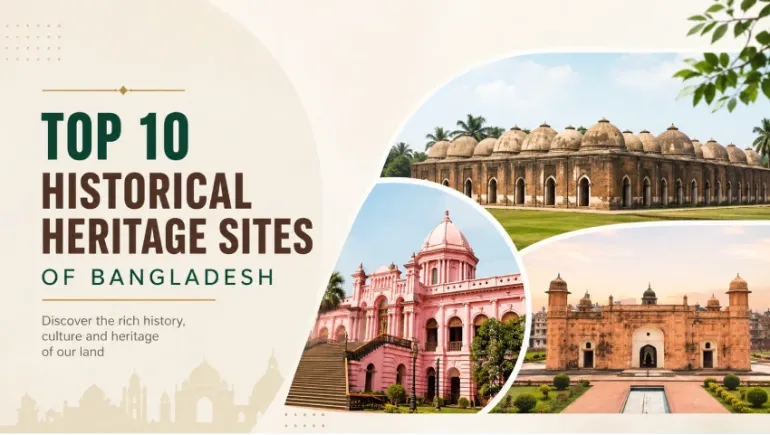
Bangladesh is a country with a rich history that spans ancient kingdoms, Buddhist civilization, Islamic architecture, colonial rule, and the struggle for independence. Across the country, numerous historical heritage sites preserve important stories about the people, cultures, and civilizations that shaped Bangladesh.
From ancient Buddhist monasteries to magnificent Mughal mosques and historic palaces, these destinations offer a fascinating journey through the country's past. Here are the top 10 historical heritage sites in Bangladesh that are worth visiting.
Somapura Mahavihara, commonly known as Paharpur Buddhist Vihara, is one of the most important archaeological sites in Bangladesh. Located in Naogaon, this ancient Buddhist monastery was built during the Pala period and became an important center of Buddhist learning.
The impressive architectural complex features a large central shrine surrounded by numerous monastic cells. Its terracotta plaques and artistic details provide valuable insight into the culture and craftsmanship of ancient Bengal. Paharpur is also recognized as a UNESCO World Heritage Site.
The Sixty Dome Mosque, locally known as Shat Gombuj Masjid, is one of the most remarkable examples of medieval Islamic architecture in Bangladesh. It was built during the 15th century under the leadership of Khan Jahan Ali in the historic city of Bagerhat.
Despite its name, the mosque actually has more than sixty domes when all of its roof structures are counted. Its numerous pillars, arches, domes, and thick brick walls create a unique architectural appearance. The Historic Mosque City of Bagerhat is a UNESCO World Heritage Site.
Lalbagh Fort is one of the most famous historical landmarks in Dhaka. Construction of the fort began in the 17th century during the Mughal period, although it was never fully completed.
The complex contains several important structures, including the tomb of Pari Bibi, a mosque, and the Diwan-i-Aam. Surrounded by gardens and historic walls, Lalbagh Fort provides visitors with a glimpse into Mughal-era Dhaka.
Ahsan Manzil, popularly known as the Pink Palace, is another iconic historical landmark in Dhaka. Situated beside the Buriganga River in Old Dhaka, the palace was the residence of the Nawabs of Dhaka.
The striking pink-colored building features grand halls, decorative architecture, and a large dome. Today, Ahsan Manzil operates as a museum where visitors can learn about the lifestyle, political influence, and history of the Nawab family.
Mainamati is one of Bangladesh's most important archaeological regions. Located near Cumilla, the area contains the remains of ancient Buddhist settlements that flourished between the 7th and 12th centuries.
Important archaeological discoveries in the region include monasteries, stupas, temples, sculptures, coins, pottery, and other artifacts. Shalban Vihara is among the best-known sites in the Mainamati area and offers visitors a fascinating look into ancient Buddhist civilization in Bengal.
Sonargaon was once an important medieval capital and trading center of Bengal. Its strategic location helped it develop into a major center of commerce, culture, and administration.
Today, visitors can explore historic structures and museums in the area, including Panam City, which is famous for its collection of old merchant houses. Sonargaon's historical atmosphere makes it one of the most interesting heritage destinations near Dhaka.
Kantajew Temple, also known as Kantaji Temple, is a magnificent Hindu temple located in Dinajpur. Built in the 18th century, the temple is particularly famous for its elaborate terracotta artwork.
The walls of the temple are covered with detailed terracotta panels depicting scenes from Hindu mythology, everyday life, animals, plants, and traditional Bengali culture. Its intricate craftsmanship makes it one of the finest examples of terracotta temple architecture in Bangladesh.
Mahasthangarh is one of the oldest known urban archaeological sites in Bangladesh. Located in Bogura, the ancient fortified city dates back more than two thousand years and was an important center of the ancient Pundra region.
The archaeological area contains ancient fortifications, temples, residential structures, wells, roads, and other remains. The site provides valuable evidence about the development of urban civilization in ancient Bengal.
Panam City is a historic urban settlement located in Sonargaon. The area became prominent during the colonial period as a commercial center for wealthy merchants and traders.
Its narrow streets are lined with historic buildings featuring European and Bengali architectural influences. Although many structures have suffered from age and neglect, the remaining buildings still offer a unique glimpse into the commercial and social history of old Bengal.
Bara Katra is an important Mughal-era architectural monument in Old Dhaka. Built during the 17th century, it originally served as a caravanserai where travelers and merchants could stay.
The historic structure reflects the architectural and commercial importance of Mughal Dhaka. Although much of the original complex has changed over time, Bara Katra remains an important part of the city's architectural heritage.
Historical heritage sites are more than just old buildings and archaeological ruins. They tell the story of how civilizations developed, how people lived, how religions and cultures spread, and how Bengal evolved through different historical periods.
Visiting these destinations also provides an opportunity to experience Bangladesh beyond its modern cities. From the ancient ruins of Mahasthangarh and Paharpur to the Mughal architecture of Dhaka and the terracotta artistry of Dinajpur, each site offers a different perspective on the country's heritage.
Bangladesh has a remarkable collection of historical and archaeological treasures spread across different regions of the country. Paharpur, Bagerhat, Lalbagh Fort, Ahsan Manzil, Mainamati, Sonargaon, Kantajew Temple, Mahasthangarh, Panam City, and Bara Katra are among the most notable places for anyone interested in history and culture.
Whether you are a history enthusiast, photographer, traveler, or simply curious about Bangladesh's past, these heritage sites can make your journey more meaningful while helping you discover the stories behind the country's rich cultural identity.












Comments
There are no comments for this Article.